
Proteomics provides a direct view of changes at the protein level, helping identify not only which proteins are altered between experimental conditions, but also the biological processes and pathways affected.
Analysis can include differential protein abundance, pathway and functional enrichment, and protein–protein interaction analysis. The examples below show some of the approaches we use to turn proteomics datasets into interpretable biological results, including volcano plots, KEGG pathway analysis, Gene Ontology Biological Process (GO-BP) enrichment and protein–protein interaction (PPI) networks.
Proteomics can also be integrated with RNA-seq data to investigate how changes in gene expression translate to the protein level and to identify shared, complementary or discordant biological responses across both datasets.
Interested in combining transcriptomics and proteomics? Explore our Multiomics analysis → click here
-
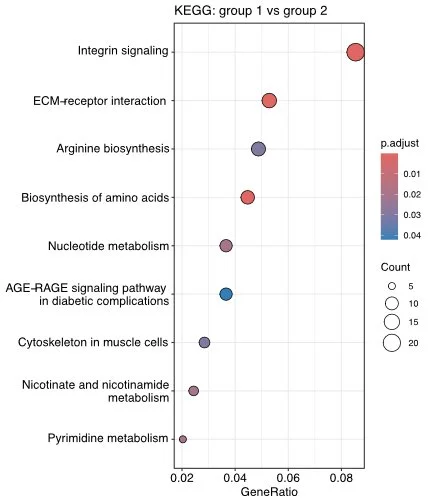
KEGG pathway analysis
-
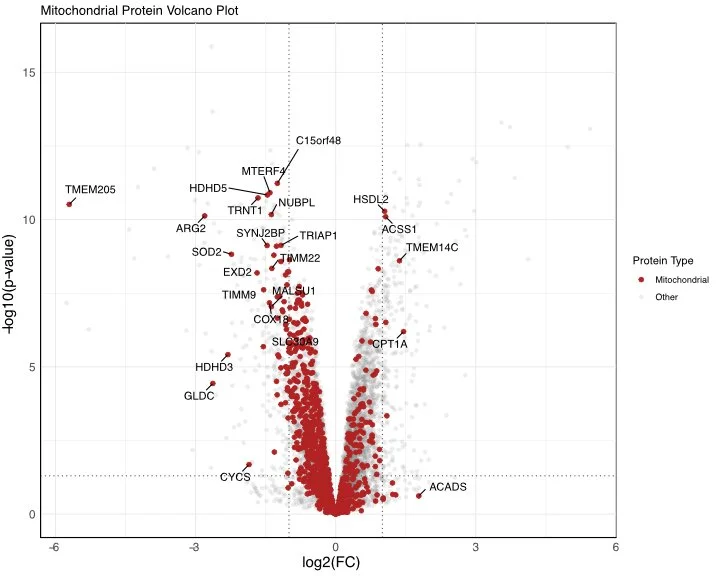
Volcano plot with pathway of interest in different colour
-
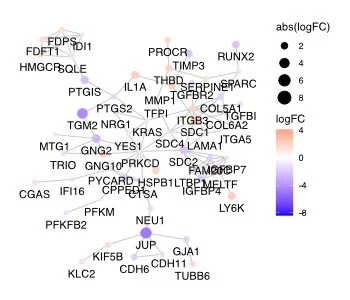
PPI network analysis example
-
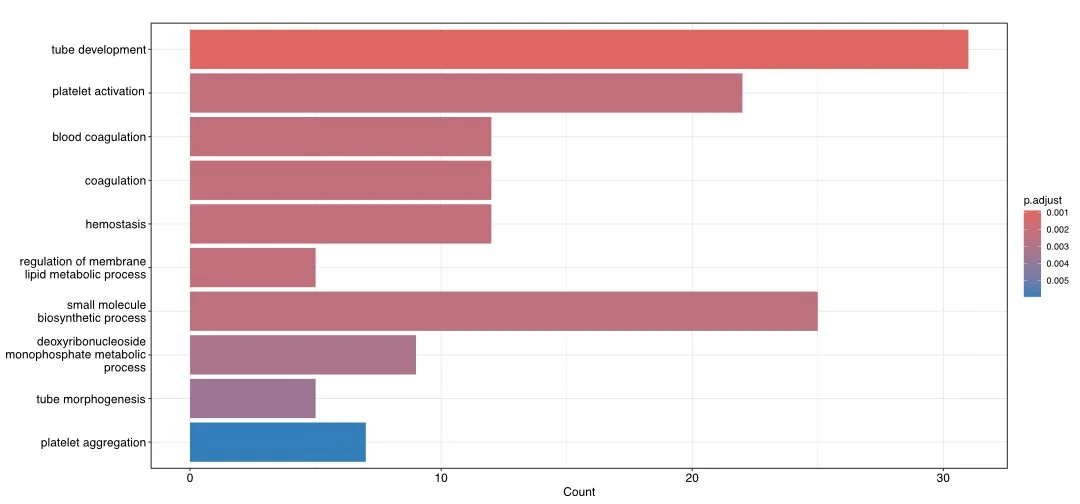
GO-BP example